
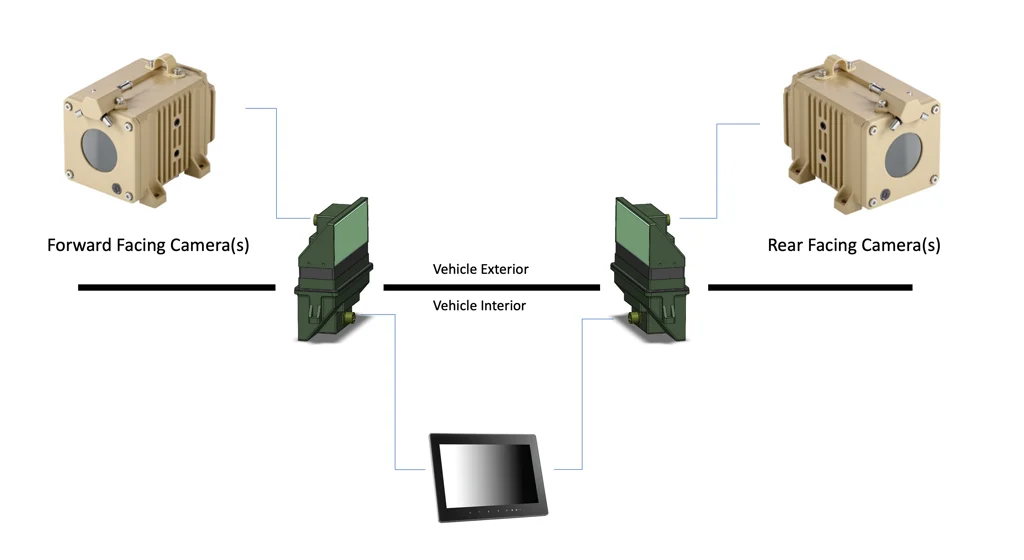
The M17PT is a rugged, electro-mechanical pass-through solution that allows external cameras and sensors—such as EO/IR, thermal, or low-light video devices—to be connected directly to interior vehicle displays. It’s a modern answer to a common challenge: how to integrate high-resolution digital sensors with legacy periscope ports and armored hulls—without full system overhauls or costly fiber optic installations.
Designed and built in Texas by Optex Systems, the M17PT features MIL-SPEC connectors, sealed cable assemblies, and modular compatibility with existing periscope housing units. Its pass-through interface mimics the footprint of traditional M17 periscopes (NSNs 6650‑00‑704‑3549 / 6650‑01‑317‑9138), making it ideal for retrofits while offering forward compatibility for new vehicle designs.
The M17PT acts as a sealed conduit between external sensors and internal displays. It routes digital video, RS485 data, and power through a rugged cable assembly and standard 8-pin MIL-DTL-26482 connectors. Inside the vehicle, users can connect to any compatible screen—whether for a commander, gunner, driver, or surveillance monitor.
This “extension cord-style” functionality enables tactical flexibility. With optional splitters (e.g., DDAN-style connectors), multiple outputs can be routed to different crew stations—allowing commanders and gunners to access the same live feed or alternate views from the same external sensor.
The M17PT is compatible with both legacy and new-generation military platforms. It can be deployed on vehicles that currently use or used to use M17-style periscopes, or those undergoing modernization where modular sensor integration is required.
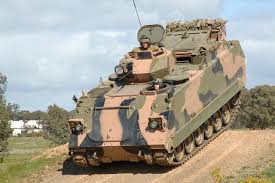
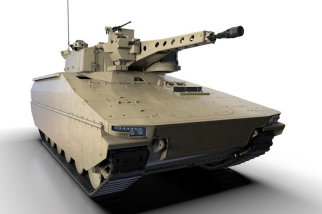
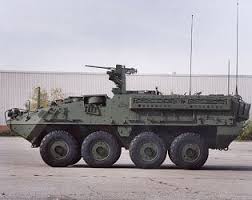
The M17PT is a future-proofed solution built for:
🔄 Refurbishment Programs – Quickly replaces outdated periscope blocks with a digital-ready alternative, without hull modification
🛠 Field Repairs & Maintenance – Serves as a drop-in replacement for damaged or degraded units, enabling new sensor configurations
🚀 New Production Vehicles – Offers integrators a low-complexity path to sensor-enabled vehicle vision from day one
