
Where Optics Meet Precision: Custom Bonding & Assembly Solutions
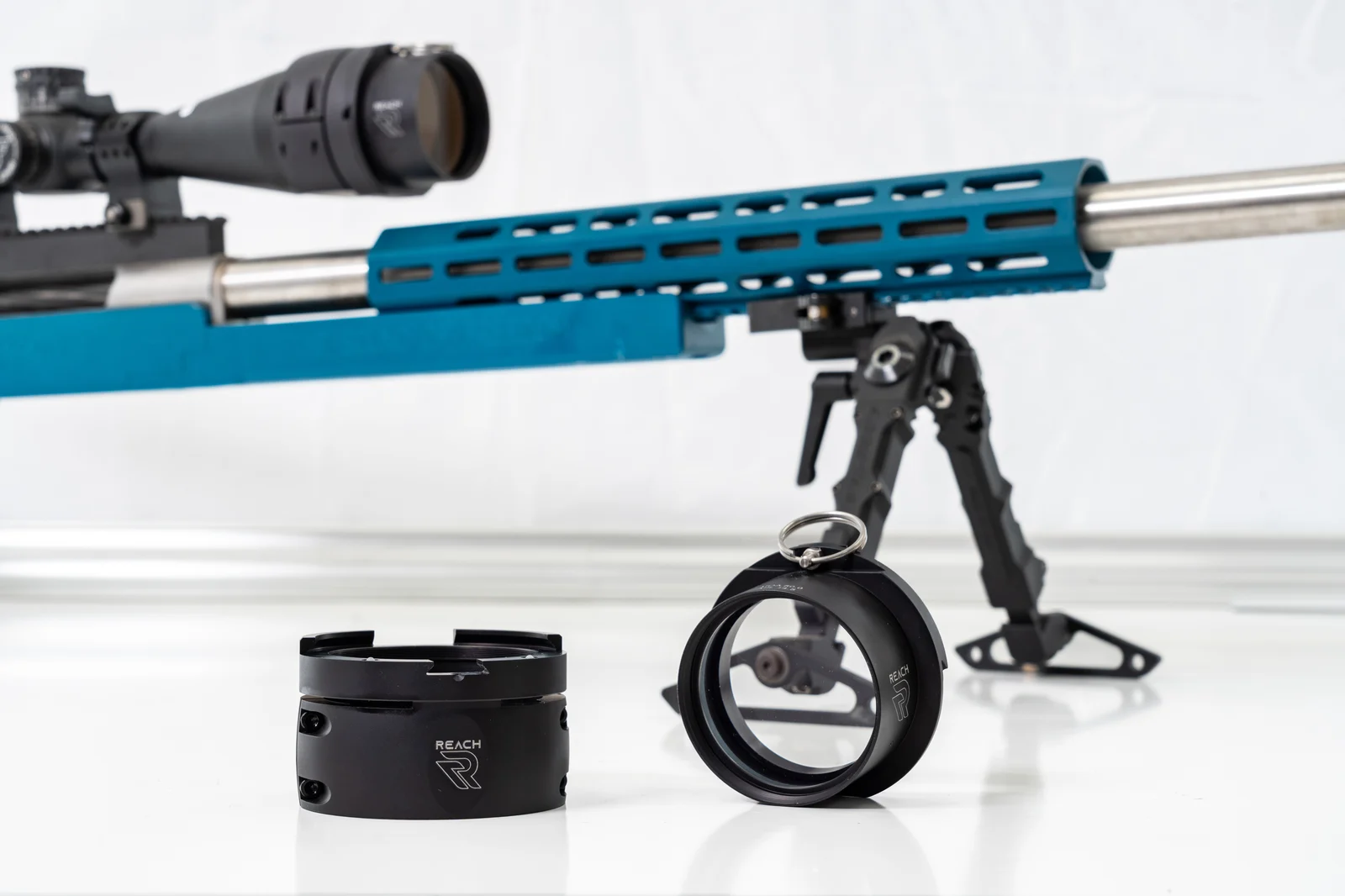
Precision Bonding and Opto-Mechanical Assembly
Technical Overview: Application for Riflescopes
AOC provides precision opto-mechanical assembly and bonding services engineered to meet the stringent requirements of riflescope manufacturers. AOC assembles optical components—such as multi-element lenses, prisms, reticles, and protective coatings—within tight tolerance mechanical housings. The process ensures precise centration, angular alignment, and optical path integrity critical for high-resolution, repeatable aiming solutions. As an ISO 9001-2015 certified facility, you can trust our processes.
Optical bonding employs aerospace-grade adhesives selected for optimal shear strength, thermal expansion compatibility, and environmental resilience. The bonding protocols include controlled UV and thermal curing cycles calibrated to maintain mechanical stability and optical clarity under temperature extremes (-40°C to +70°C), vibration, shock, and humidity exposure typical of field deployment.
AOC’s integration of optical and mechanical subassemblies reduces cumulative tolerance stack-up and facilitates scalable production. Environmental stress screening (ESS) protocols simulate operational stresses to validate long-term reliability and zero retention.
Through close collaboration with OEM design teams, AOC supports design-for-manufacturability optimization, prototype validation, and volume production runs, providing riflescope manufacturers with turnkey opto-mechanical assemblies engineered for precision, durability, and operational excellence.
Expert optical assembly at sub and system levels
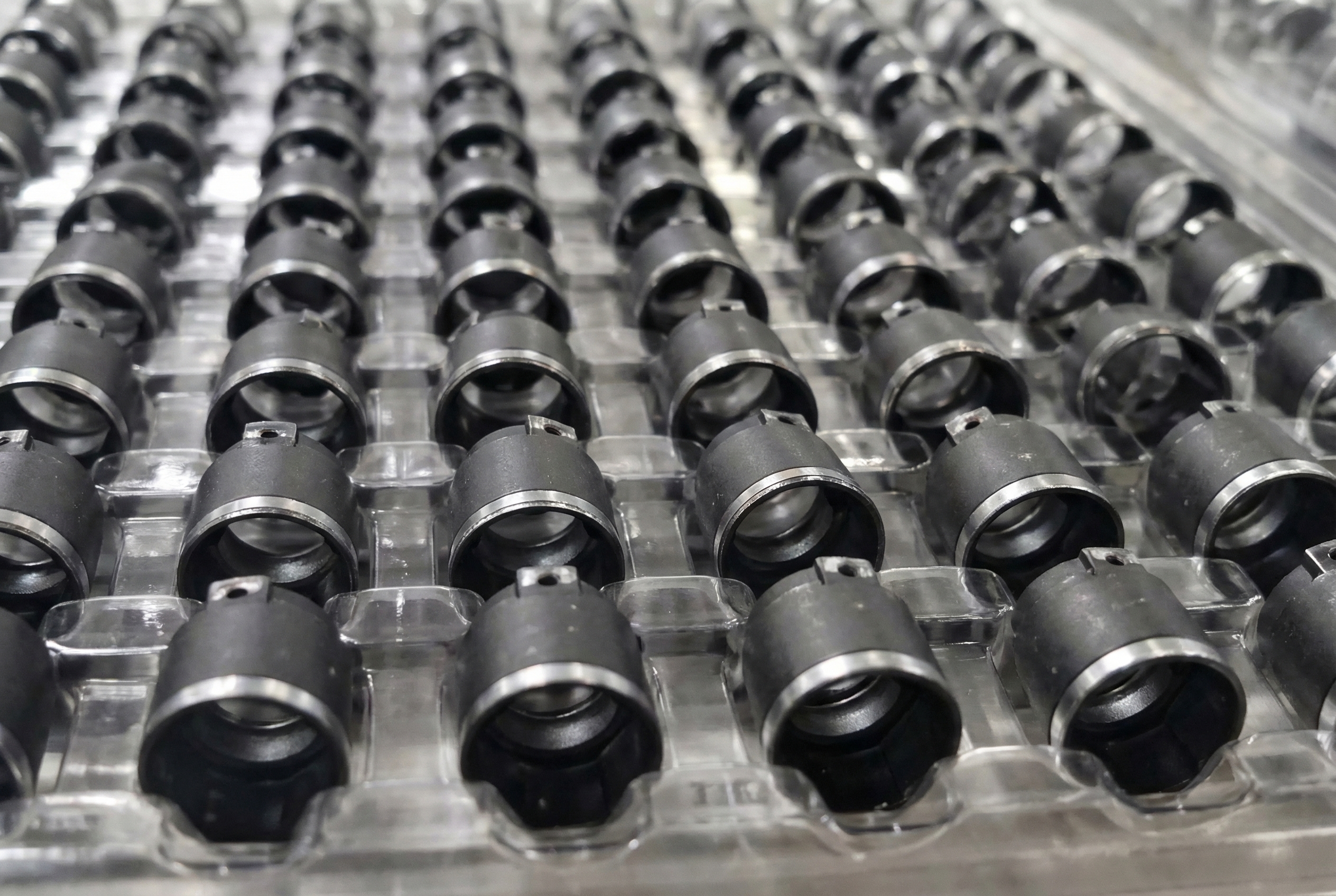
Multi Element Assembly
Optical Glass Bonding
Bonded Prism to a mount "Opto-Mechanical Bonding"
Specialized Bonding Capabilities
AOC delivers precision bonding services essential to Opto-mechanical assemblies and sub-assemblies associated with visible and infrared devices, drones and aviation sighting systems, ensuring structural integrity, optical clarity, and environmental durability. Our bonding processes accommodate diverse material interfaces common in numerous optical assemblies, including glass-to-glass, glass-to-metal, and plastic-to-plastic configurations.
1. Glass-to-Glass Bonding
Adhesive Types: UV and thermal curing optical epoxies
Applications: Multi-element lenses, filters, prisms and internal optical assemblies
Performance:
- Refractive index matching to minimize internal reflections
- Void-free, uniform bonding layer
- High resistance to thermal cycling (-40°C to +70°C) and vibration
Process Controls: Cleanroom assembly environment, humidity/temperature control, precision alignment fixtures
Validation: Interferometric wavefront distortion testing, shear strength testing
2. Glass-to-Metal Bonding
Adhesive Types: Aerospace-grade epoxy resins with high shear strength and thermal expansion compatibility
Applications: Optical component mounting to aluminum, stainless steel and various metal housings
Performance:
- Strong adhesion with micro-roughened surfaces
- Hermetic sealing for moisture ingress prevention
- Mechanical shock and recoil force resistance
Process Controls: Surface treatment protocols, controlled curing cycles (thermal and UV)
Validation: Environmental stress screening (ESS) including thermal shock, drop shock and humidity exposure
3. Plastic-to-Plastic Bonding
Adhesive Types: UV-curable adhesives, solvent-based bonding agents compatible with polycarbonate, PEEK, and other engineering plastics
Applications: Reticle holders, lens and prism components, protective windows
Performance:
- Maintains mechanical strength and dimensional stability
- Optical clarity preserved for transparent plastics
- Resistant to mechanical stress and environmental degradation
Process Controls: Precise adhesive application, UV curing with intensity control
Validation: Durability testing under simulated field conditions
Quality Assurance and Testing
- Interferometric metrology for optical precision
- Mechanical strength testing (shear, peel)
- Environmental stress screening (thermal cycling, humidity, vibration)
- Production lot traceability and documentation
IVAS | NEXT GENERATION
1. Precision Optical Systems for ISR Payloads
High-Resolution, Multi-Spectral Optics:
Optex AoC can design and manufacture ruggedized optical assemblies that integrate visible, infrared (IR), and low-light sensors in compact, vibration-resistant packages ideal for UAV payloads.
Adaptive Optics & Stabilization:
Offering gyroscopic stabilization and mechanical compensation to ensure clear imaging despite UAV motion and atmospheric disturbances—critical for long-range reconnaissance and targeting drones.
Complimentary technology utilizing our optical coatings solutions, read more on this topic HERE
2. Advanced Mechanical Design for UAV Payload Integration
Lightweight, High-Durability Mounts and Gimbals:
Custom mechanical housings and vibration-isolated mounts engineered to reduce weight without sacrificing stability, extending UAV flight endurance and sensor accuracy.
Modular Payload Enclosures:
Flexible, quick-swap optical payload mounts tailored for various sensor suites (EO/IR/LIDAR), enabling rapid reconfiguration per mission needs.
3. Augmented Reality & Visual Enhancement Modules
AR-Enabled Visual Systems:
Building on IVAS experience, AOC can deliver augmented reality optics that support overlay targeting, navigation, or sensor data directly into drone operator displays or smart glasses, enhancing situational awareness.
Enhanced Optical Zoom and Autofocus Mechanisms:
Support precise high quality optics for mechanical zoom lenses with rapid autofocus and remote actuation designed for drone ISR platforms to maximize image fidelity at varying distances.
4. Custom Electro-Optical (EO) Sensor Integration
Supporting Integration of EO/IR Sensors:
AOC’s precision mechanical assembly ensures precise optical alignment and thermal management for IR sensors within UAV payloads, supporting sensor performance and longevity.
Payload Power & Data Interface Solutions:
Assembly of mechanical-optical subsystems that may include integrated electrical interfaces that simplify UAV payload power delivery and data transmission.
5. Ruggedized Components for Harsh Environments
Environmental Sealing & Shock Resistance:
Optical housings and mechanical parts engineered to meet MIL-STD-810 standards for shock, vibration, dust, and water resistance, suited for all operational theaters.
6. Collaborative Development & Rapid Prototyping
Flexible Engineering Partnership:
Leveraging our design and manufacturing agility for custom R&D projects, from concept to prototype through to production scaling.
IVAS Experience:
Demonstrated capability in meeting top-tier defense technology requirements for next-gen optical and mechanical systems.

Specialized Opto-Mechanical Solutions
AOC specializes in the design and manufacture of advanced opto-mechanical solutions that deliver peak optical performance for defense, aerospace, and precision imaging applications.
Leveraging decades of expertise, AOC achieves precision alignment and arc-second angular accuracy in complex optical assemblies, ensuring exceptional system stability and target fidelity.
Through the use of matched index materials and components polished to 20th wave surface accuracy with high-accuracy surface finishes, AOC minimizes aberrations and maximizes optical throughput.
As required, Modulation Transfer Function (MTF) testing to validate imaging quality and system performance, guaranteeing mission-critical reliability in demanding operational environments.
Engineering tomorrow’s security
